%%Post image thumbnail below.%%
# Episode Overview
> - **Date Aired:** [[12-23-2023]]
> - **Title:** The Eggnog Riot of 1826
> - **Episode:** 274
> - **Description:** Exploring historical points of interest in history — Christmas edition! 🎄
> - **Link:** <https://rumble.com/v430the-big-dig-energy-274-the-eggnog-riot-of-1826.html>
%%<https://historydraft.com/happened/what-happened/1-January/world>%%
## Replay
%% Get embed URL then highlight and hit ALT + I%%
<iframe src="https://rumble.com/embed/v40fgjn/?pub=6eeyh" allow="fullscreen" allowfullscreen="" style="height:100%;width:100%; aspect-ratio: 16 / 9; "></iframe>
<br>
## Greetings & Announcements
1. Merry Christmas!
2. Going to go ahead and put it out there that I anticipate not having a show on January 4th. Thanks for your understanding.

## Segments
### The Drinker's Dictionary
In order to understand fully the forthcoming Eggnog Riot tale, it's important to understand what led to that moment. As we'll learn shortly, by the year 1830, Americans were consuming on average 7.1 gallons of pure alcohol per year.
This led to many of our founding father's decisions being influenced heavily by copious amounts of alcohol.
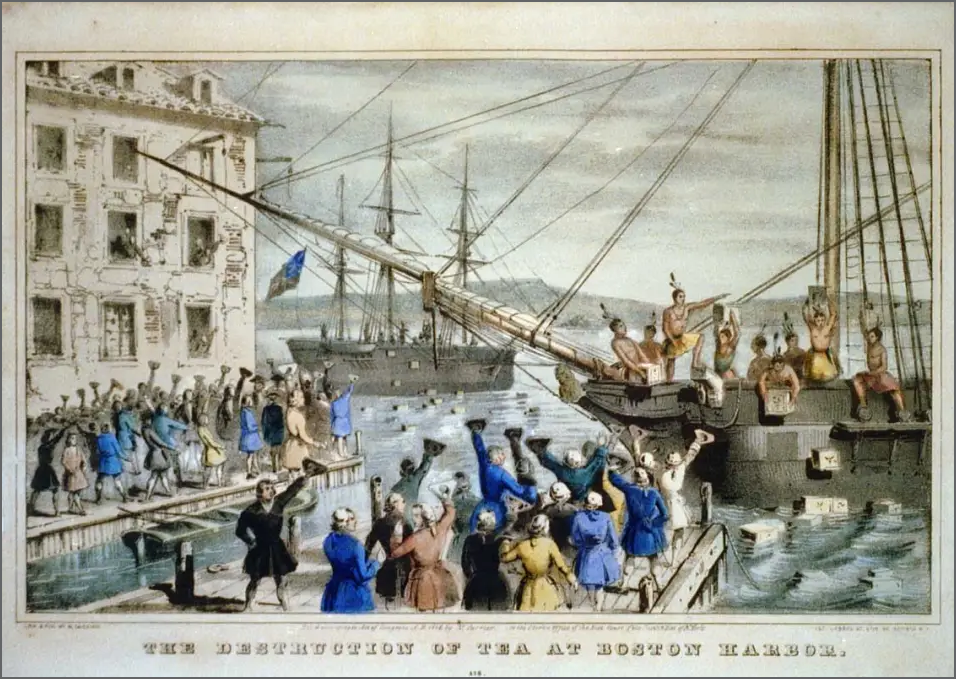
The most famous example of this decision-making process at work is probably the Boston Tea Party. Paul Revere, Sam Adams, and the other members of the Sons of Liberty had met at the Green Dragon Tavern in Boston to toss a few back and plan an act of civil unrest. The Boston Tea Party's (December 16, 1773) original plan had been to creep onto the tea ships in Boston harbor and simply block the ship workers from unloading their tea, and ultimately forcing the ships to return their cargo to England. — [Source](https://archive.is/ibehk)
However, bolstered by the few pints they had at the Green Dragon Tavern just moments before, suddenly a little wanton destruction of property seemed like a better idea.
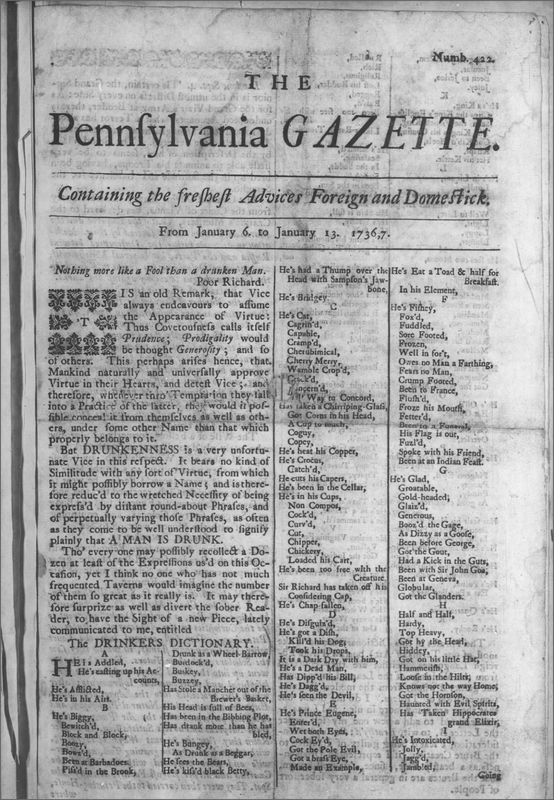
Before then, in early 1737, Benjamin Franklin penned anonymous articles for The Pennsylvania Gazette under the pseudonym Silence Dogood, centered around alcohol. This has since become known as [The Drinker's Dictionary](https://archive.is/iepFF).
> [!grid|masonry]
> 
> 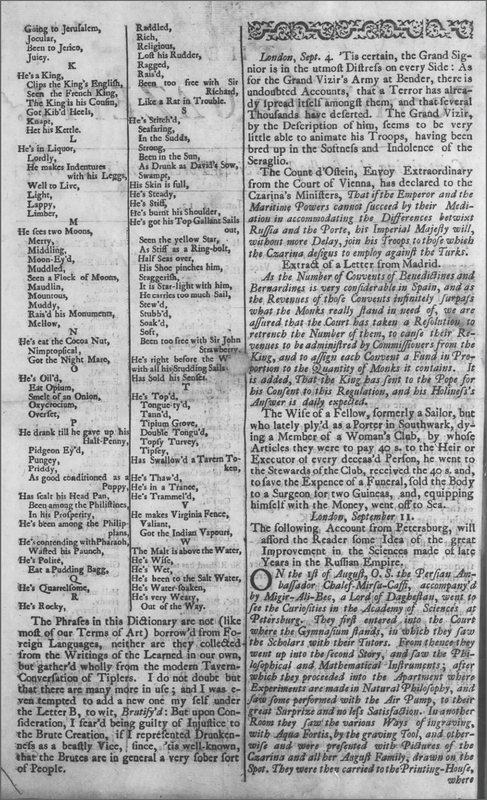
[Page 1](https://www.newspapers.com/article/the-pennsylvania-gazette/137309208/) • [Page 2](https://www.newspapers.com/article/the-pennsylvania-gazette/137309194/)
### George Washington's Booze-Laden Eggnog

From a Mike Rampton [article](https://www.mentalfloss.com/posts/george-washington-boozy-eggnog-recipe):
> Founding a country is stressful work, so you can’t blame George Washington for occasionally wanting to put his feet up and kick back with a cocktail or two. In the late 18th century, booze flowed pretty freely—though it was far from free. An estimated 7 percent of our first president’s income while in office was spent on booze.
>
> Beer was in abundance on Washington’s estate, Mount Vernon; it was brewed there in huge quantities, and servants working there were given a quart of beer a day. One year after his presidency, Washington even had a whiskey distillery installed at Mount Vernon—and it made a profit. While Washington was reportedly in the habit of consuming a bottle of Madeira a night, when ‘twas the season, eggnog was this Founding Father’s festive fave.
>
> A particularly robust eggnog recipe frequently attributed to ol’ quarter-face shows just how much of the hard stuff was whirling around at the time. When visitors came to see Washington at Mount Vernon, this is what the kitchen staff would put together for them:
>
> One-quart cream, one-quart milk, one dozen tablespoons sugar, one-pint brandy, ½ pint rye whiskey, ½ pint Jamaica rum, ¼ pint sherry – mix liquor first, then separate yolks and whites of 12 eggs, add sugar to beaten yolks, mix well.
>
> Add milk and cream, slowly beating. Beat whites of eggs until stiff and fold slowly into mixture. Let set in cool place for several days. Taste frequently.
>
> That’s four different types of booze, and none of them in small quantities. It’s the kind of drink that would make you say, “I cannot tell a lie: I’m hammered.” There’s Christmassy, and there’s Christmessy—this stuff would leave you lying on the ground like a chopped-down cherry tree, with breath like you had wooden teeth.
It's no wonder eggnog led to a riot...
### The Eggnog Riot of 1826
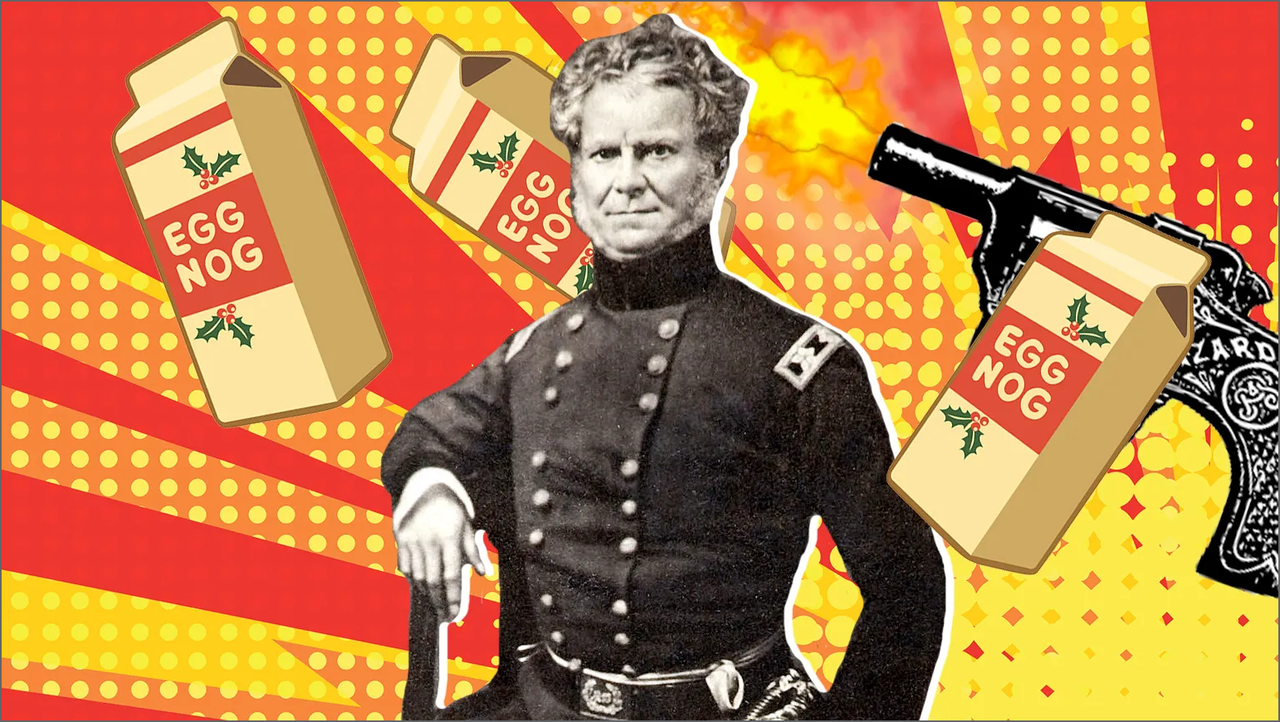
If you thought the title was clickbait, I am delighted to inform you that it was not. Here are some key takeaways provided to us from a [Big Think article](https://archive.is/0MtCZ) written by Matt Davis on the subject of the Eggnot Riot of 1826:
- In 1826, Americans loved to drink, and the young cadets at West Point Academy were no exception.
- After being forbidden from imbibing everyone's favorite egg-based holiday beverage, West Point cadets would go on to start a riot that lasted into the early hours of Christmas morning.
- The story behind the Eggnog Riot both offers a glimpse into life in 1826 and the history behind how West Point became the disciplined institution it is today.
> Americans used to really enjoy a stiff drink or five. Today, the average American drinks a little over two gallons of pure alcohol a year, but in 1830, that number was 7.1 gallons. It makes sense: Clean drinking water was hard to find, the dangers of alcohol were less understood, and it was just common practice to toss a few back throughout the day.
>
> Unfortunately, maintaining a near-constant buzz has a tendency to limit your prospects in life. In 1826, Colonel Sylvanus Thayer was tasked with molding the nation’s top military minds at West Point Academy, but he had a problem: the academy’s cadets were drunks.
>
> The student body in 1826 was a particularly bad bunch. Among them was Jefferson Davis, who’d later go on to become the president of the Confederacy. Before this, though, Davis drunkenly stumbled into a 60-foot-deep ravine, and was the first cadet to be arrested for visiting the local tavern.
>
> He was arrested because Thayer was determined to whip some discipline into the fledgling academy and its cadets. Thayer is known as “the father of West Point” because of the many reforms he made, such as raising admissions standards, introducing engineering as a key subject, and outlawing the consumption of alcohol. Before 1826, though, students were permitted to drink on the fourth of July and Christmas; this would be the first year that Thayer forbade drinking even on these special occasions, with disastrous consequences.
**Side Note:** In 1825, the fourth of July celebration had devolved to a state not fitting a West Point cadet, when a “snake dance” led to the hoisting of the school’s Commandant on the students’ shoulders. Thayer was irate, and the party was over. From 1826 onward, no alcohol was allowed on campus on pain of arrest and expulsion.
[Continue here.](https://archive.is/20231224014342/https://bigthink.com/the-present/what-was-the-eggnog-riot/#selection-919.0-919.15)
Cadets Expelled: https://www.army.mil/article/49823/the_eggnog_riot
Other Sources: https://archive.is/2HcPN • https://archive.is/uV0ZX
### White House Christmas Decor Through the Years
The White House [observance of Christmas](https://www.whitehousehistory.org/collections/holiday-cheer-at-the-white-house) before the twentieth century was not an official event. First families decorated the house modestly with greens and privately celebrated the Yuletide with family and friends. President Calvin Coolidge was the first chief executive to preside over a public celebration during the holidays with the lighting of the National Christmas Tree in 1923.
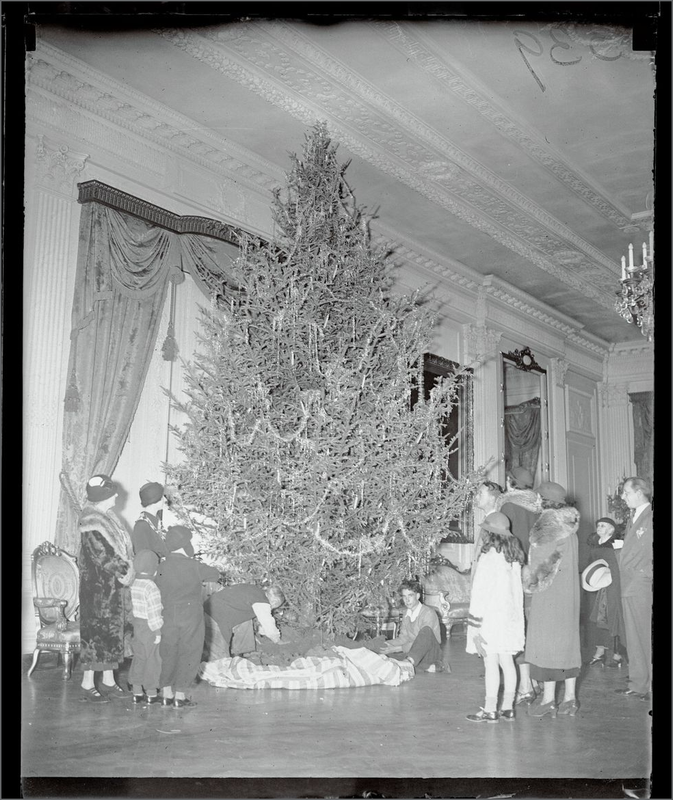
<sup><center><b>The White House East Hall Christmas tree was to be admired by visitors, while President Franklin Delano Roosevelt also had a family tree on the second floor.</b> </center></sup>
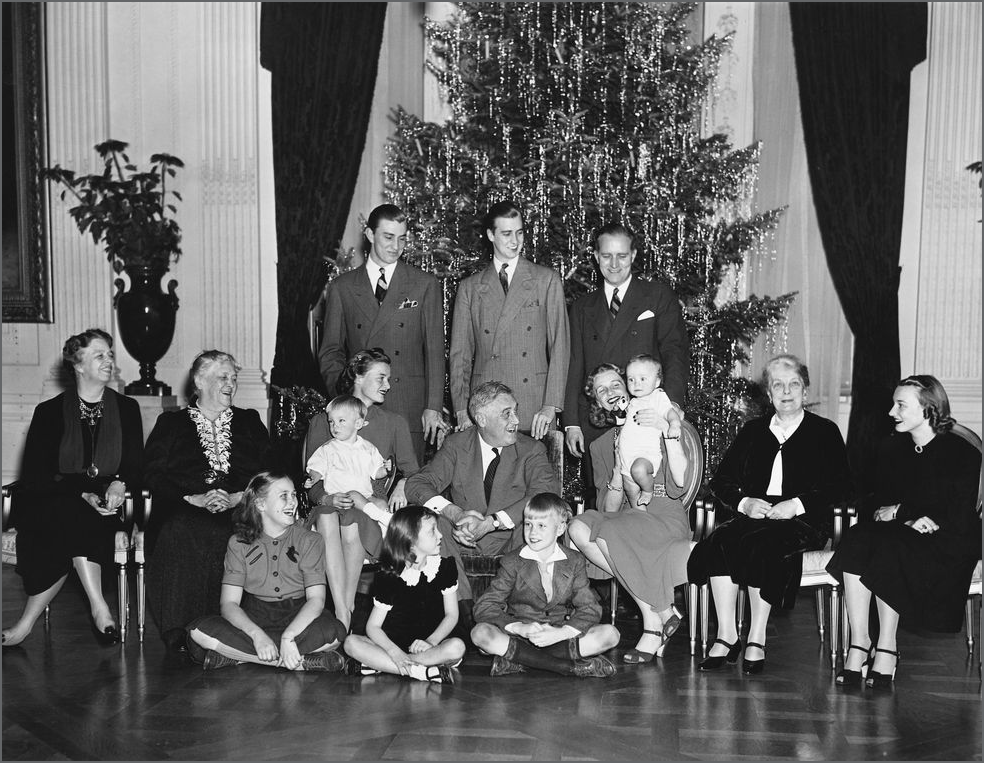
<sup><center><b> During his 12 years in office, FDR had many family Christmas traditions, such as lighting the tree with real candles, a reading of Charles Dicken's Christmas Carol, and a Christmas day church service. </b> </center></sup>
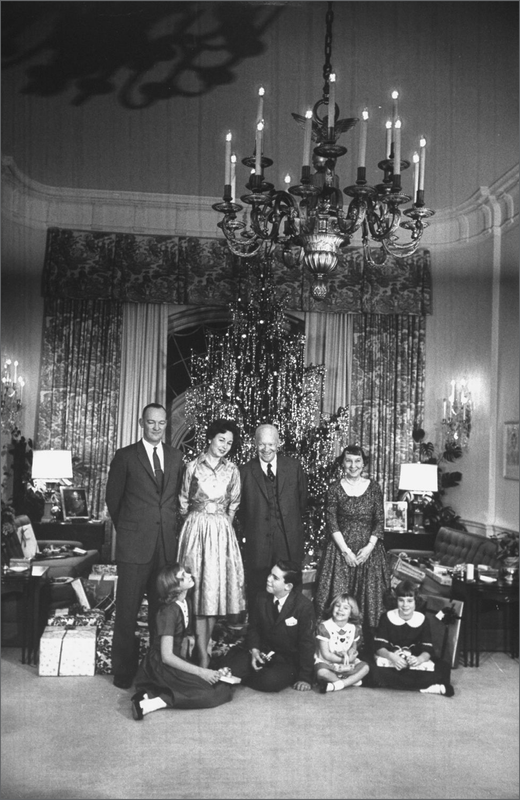
<sup><center><b> The Eisenhower family stands in front of their Christmas tree, hung with silver tinsel, on their last year in the White House. </b> </center></sup>
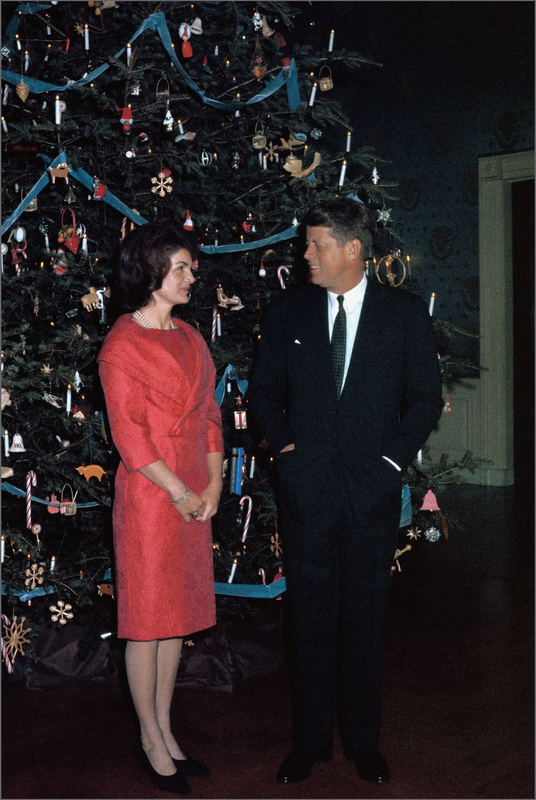
<sup><center><b> The White House tradition of decorating in [Christmas themes](https://www.whitehousehistory.org/jacqueline-kennedy-refines-the-season) began with Jacqueline Kennedy when she chose to decorate the tree with ornaments from the "Nutcracker Suite." </b> </center></sup>

<sup><center><b> A banner that declared "Peace On Earth to Men of Goodwill" frames the South Lawn during the Johnson administration. (1964) </b> </center></sup>
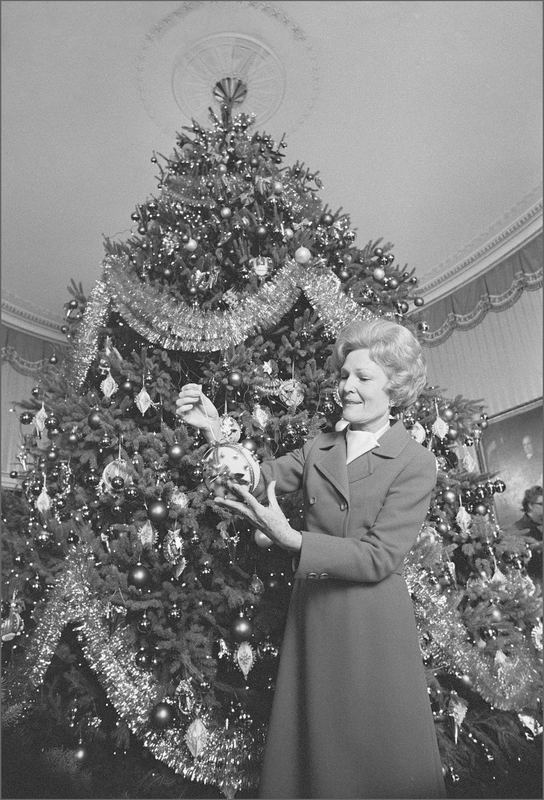
<sup><center><b> Since the Hoover administration in 1929, decorating the official White House Christmas tree has been a responsibility of the First Lady. In 1970, Patricia Nixon trimmed the tree with glass ornaments and tinsel. </b> </center></sup>
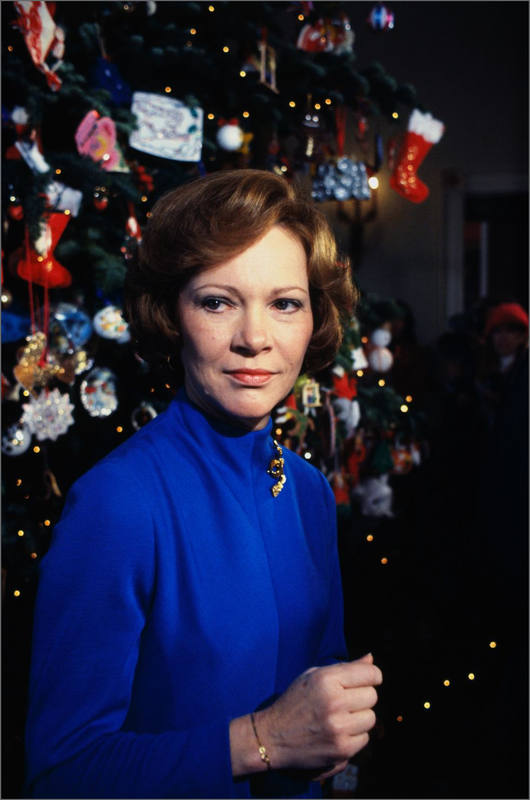
<sup><center><b> First Lady Rosalynn Carter decorated the 1977 White House Christmas tree [with ornaments](https://www.whitehousehistory.org/rosalynn-carter-recaptures-the-past) made by members of the National Association for Retarded Citizens. </b> </center></sup>
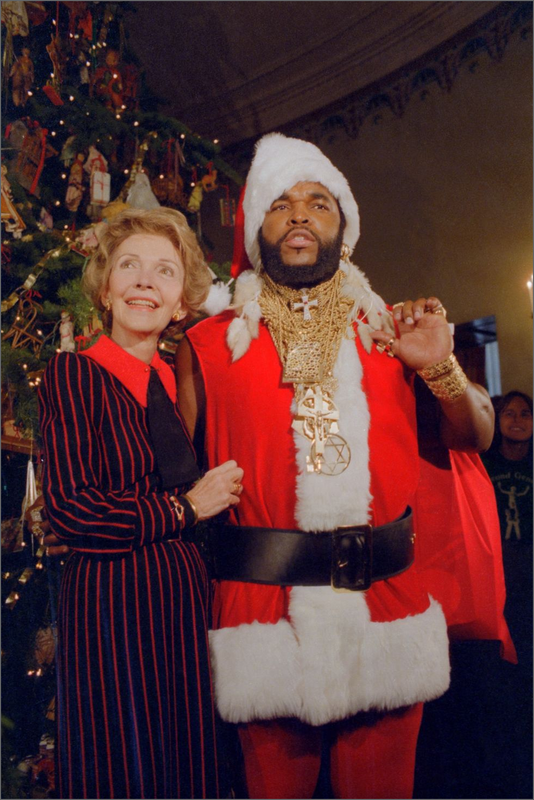
<sup><center><b> In the unveiling of the 1983 Christmas decorations, Nancy Reagan was accompanied by Mr. T, star of The A-Team, dressed as Santa Clause. </b> </center></sup>
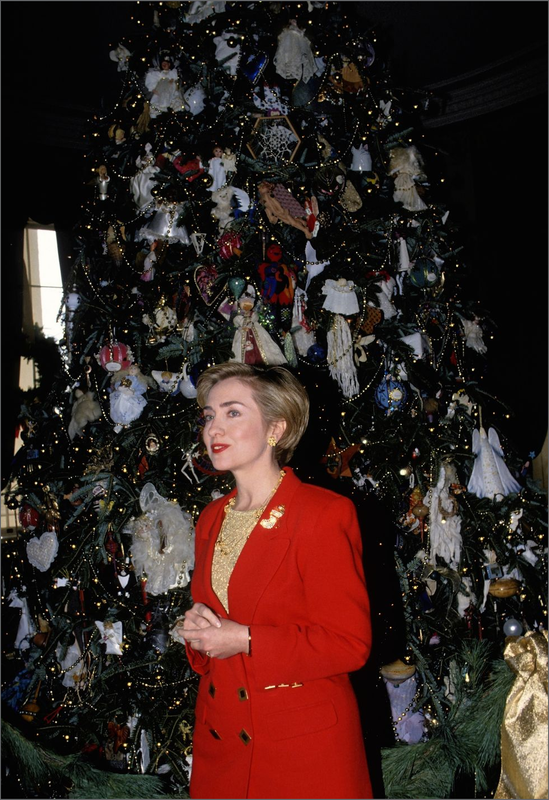
<sup><center><b> First Lady [[Hillary Clinton]] decorated an 18.5-foot Fraser fir tree with a mix of classic and ["funky"](https://archive.is/o81gS) ornaments for her first Christmas in the White House. </b> </center></sup>
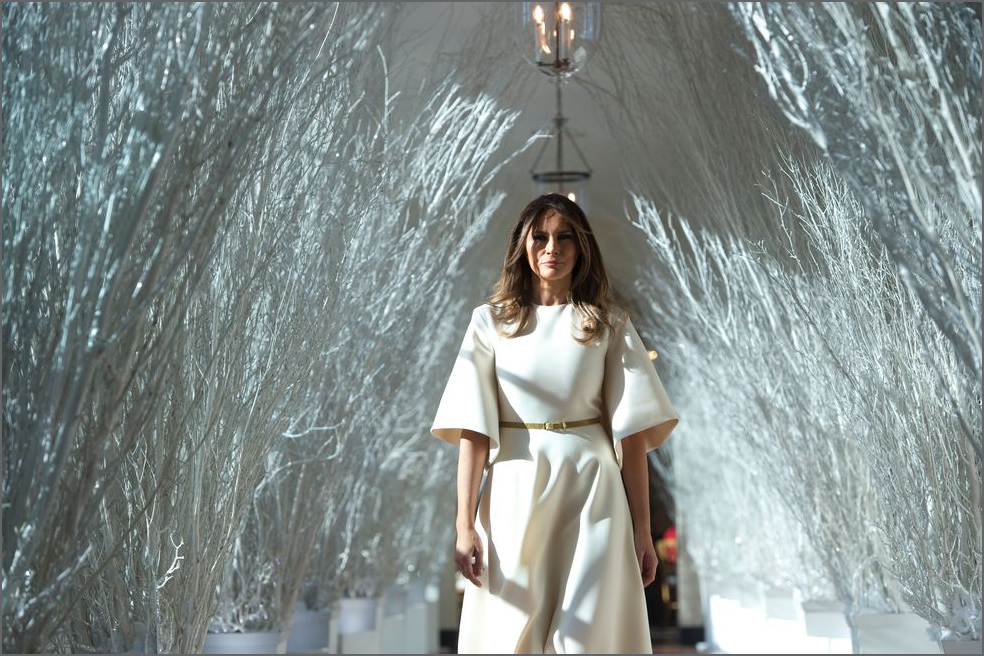
<sup><center><b> First Lady Melania Trump walks through Christmas decorations in the East Wing as she tours holiday decorations at the White House. The theme was “Time-Honored Traditions.” </b> </center></sup>
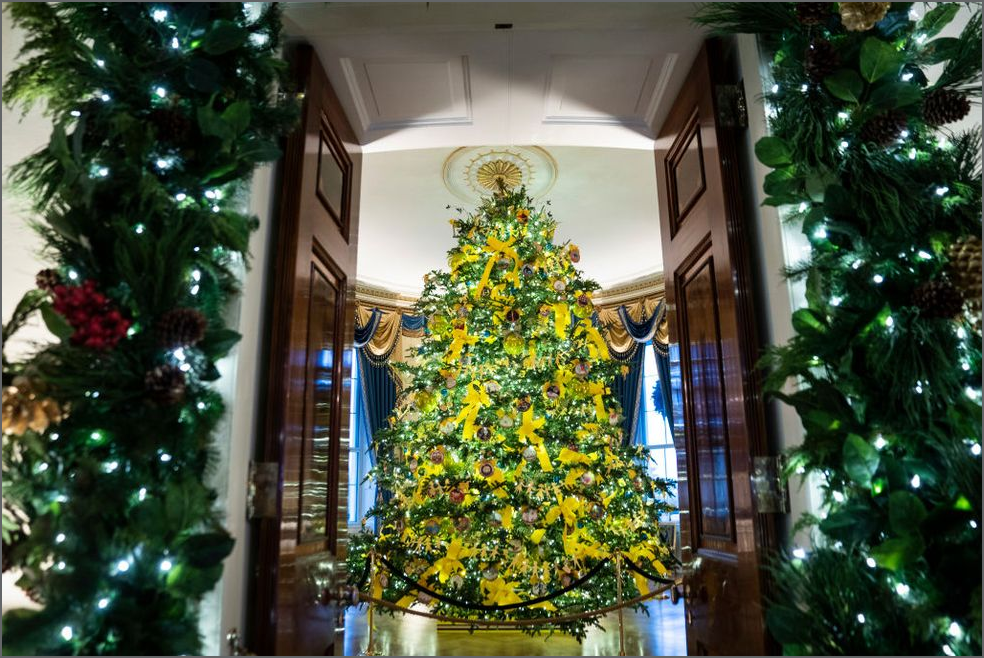
<sup><center><b> For the Trumps's last Christmas in the White House, the First Lady chose the theme "America the Beautiful." The decor featured pops of color, including yellow bows on the official tree and red ornaments on trees lining the hallways. </b> </center></sup>
<sup><center><b> </b> </center></sup>
<sup><center><b> </b> </center></sup>
%% FOOTER %%
---
---
## Keep Digging
%%Space%%
### Tags
#Stream/BDE
### Footnotes & References